PhD Students
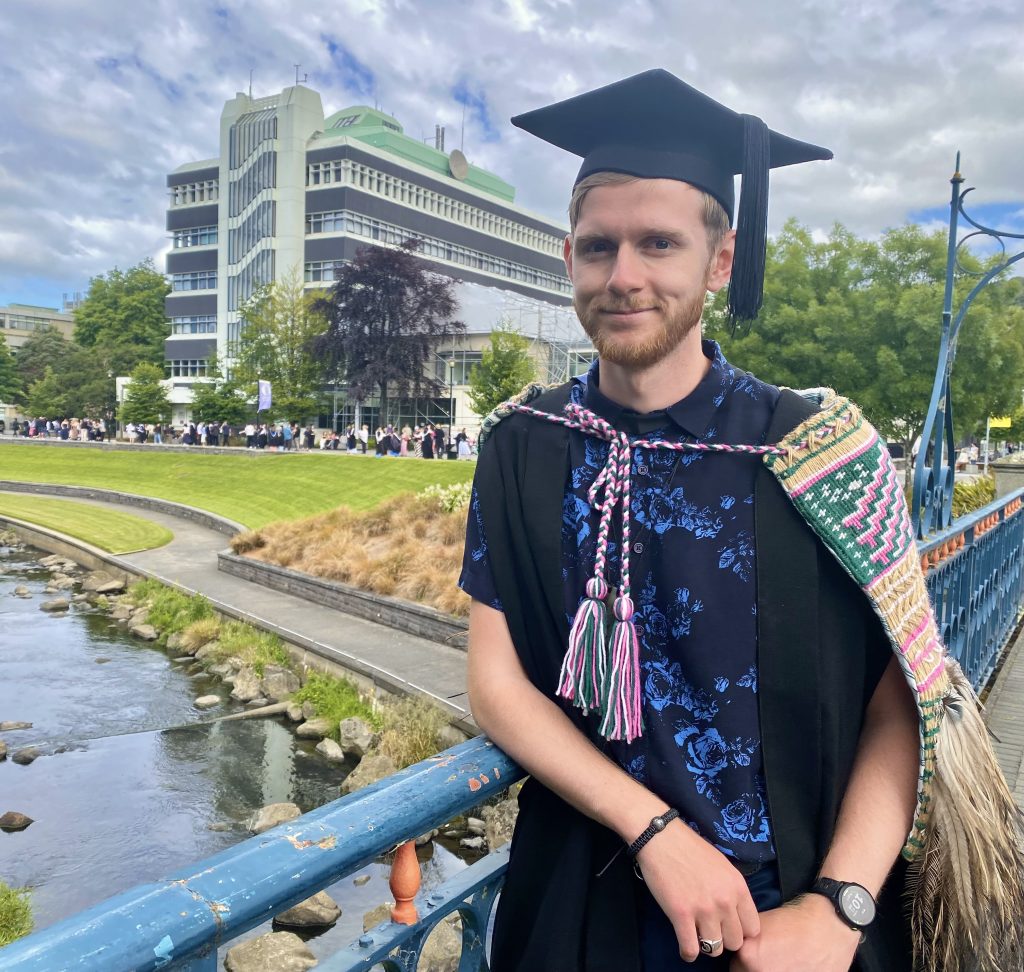
Travers Bloemsaat
I am a PhD student in the relativity group, supervised by Jörg Frauendiener and externally co-supervised by Chris Stevens. My PhD project focuses on investigating the instability of the inner horizon of a sub-extremal Reissner-Nordstrom black hole using numerical -conformal methods. I am also interested in visualising space-times and special relativistic effects using Blender.
Kaushal Pillay
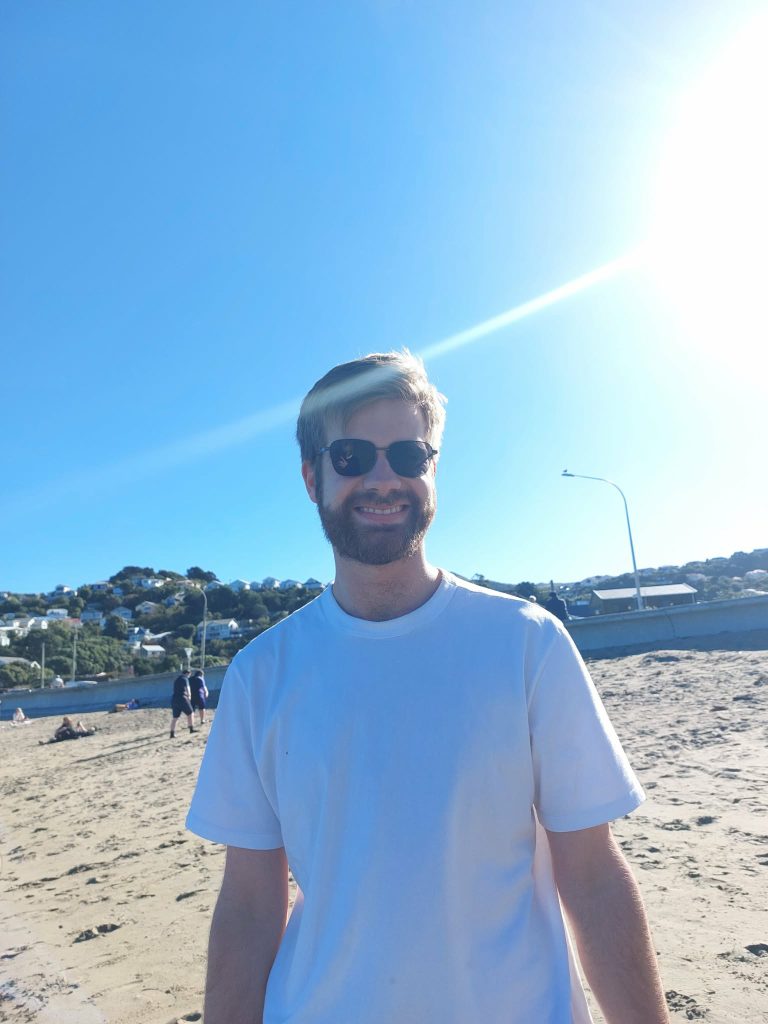
I am a PhD student in the relativity group, supervised by Jörg Frauendiener. My broad area of interest lies in gravitational waves and black hole physics. Currently, I am studying whether it is possible to “kick” a black hole, i.e., impart some linear momentum to it if a gravitational wave carrying linear momentum scatters off it. For studying this numerically, I use the COFFEE package, which is developed by both the groups at Otago and Canterbury.
I graduated with a BSc-MSc degree from IISER Tirupati in India, majoring in physics. As part of my MSc thesis, I worked at IUCAA Pune, where I looked into testing the no-hair theorem with gravitational wave observations.
Thomas Tawfik
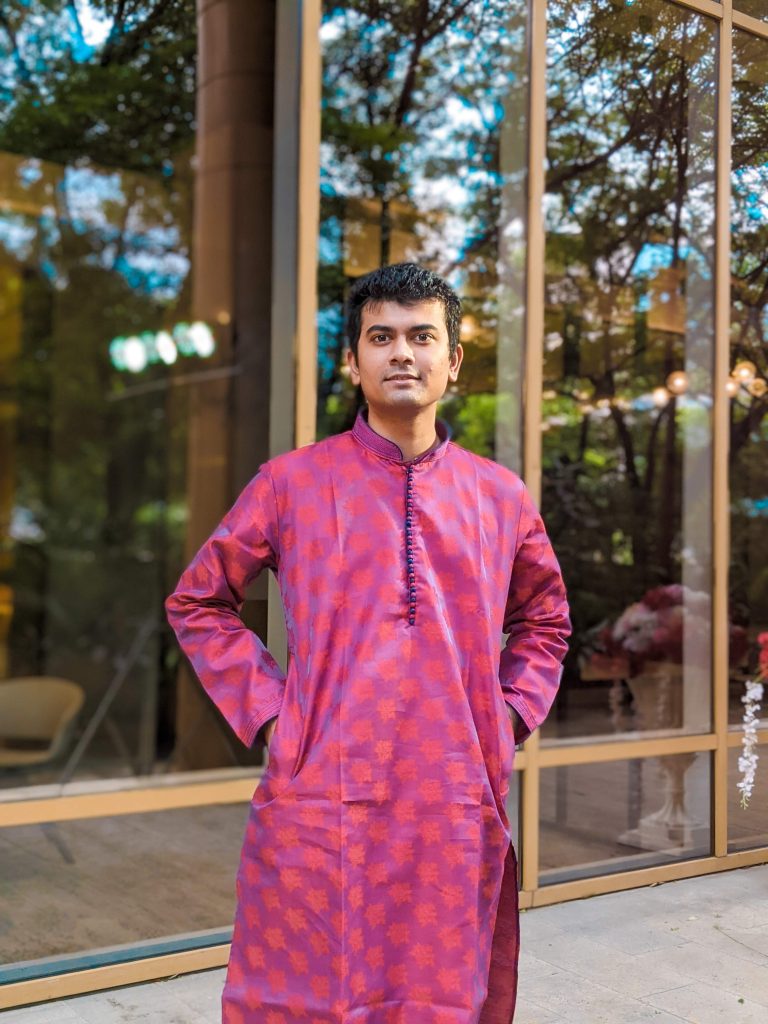
I am a PhD student in the relativity group, working under the supervision of Florian Beyer with partial support by the Marsden Fund Council from Government funding, managed by Royal Society Te Apārangi (Award Number: MFP-UOO2322).
My main area of research is the analysis of PDEs arising in mathematical cosmology with the goal of understanding the implications of this for early-universe cosmology. In particular, I am interested in analyzing the non-linear stability of cosmological spacetimes and the associated asymptotic dynamics in the direction of the initial big bang singularities of such spacetimes. Another area of interest is related to the question of how astrophysical observations could help constrain cosmological models, and so what this could imply for the Copernican Principle. Before starting my PhD at Otago, I had completed my master’s degree in theoretical physics at Alma Mater Studiorum – Università di Bologna in Italy.
Away from my main research interests, I am passionate about philosophy and arts and their intersection with natural sciences. For example, I am interested in the philosophy of physics and how it bears on the foundations of physics, particularly general relativity.
Master Students
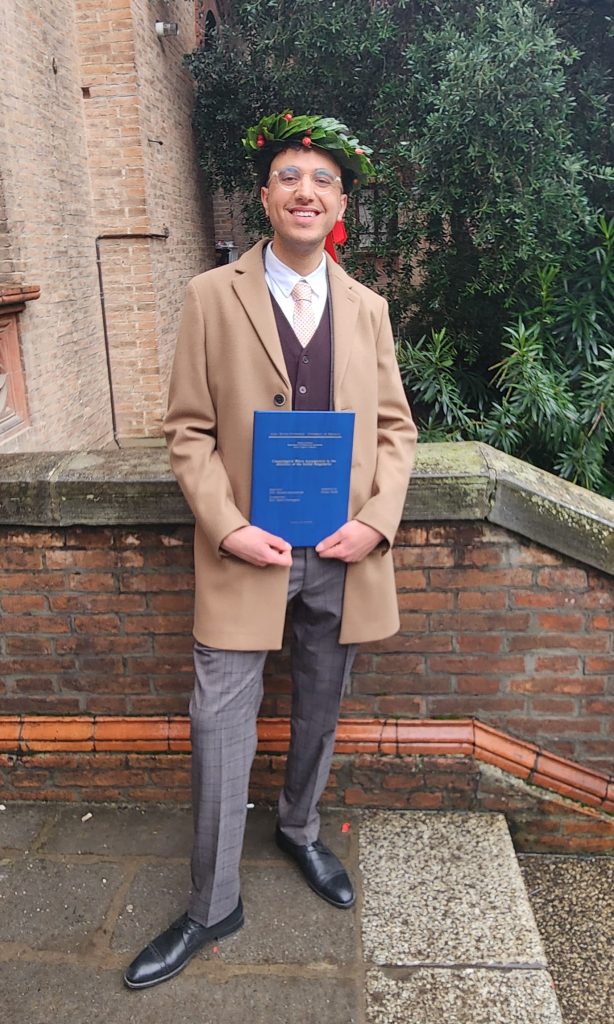
Sam Hulbe-Pulver
I am a masters’ student in the relativity group, supervised by Florian Beyer and Josh Ritchie. My work involves numerical investigations of the inflaton field coupled to anisotropic spacetime backgrounds. In particular, I am interested in how such backgrounds influence the formation and lifespan of oscillons.
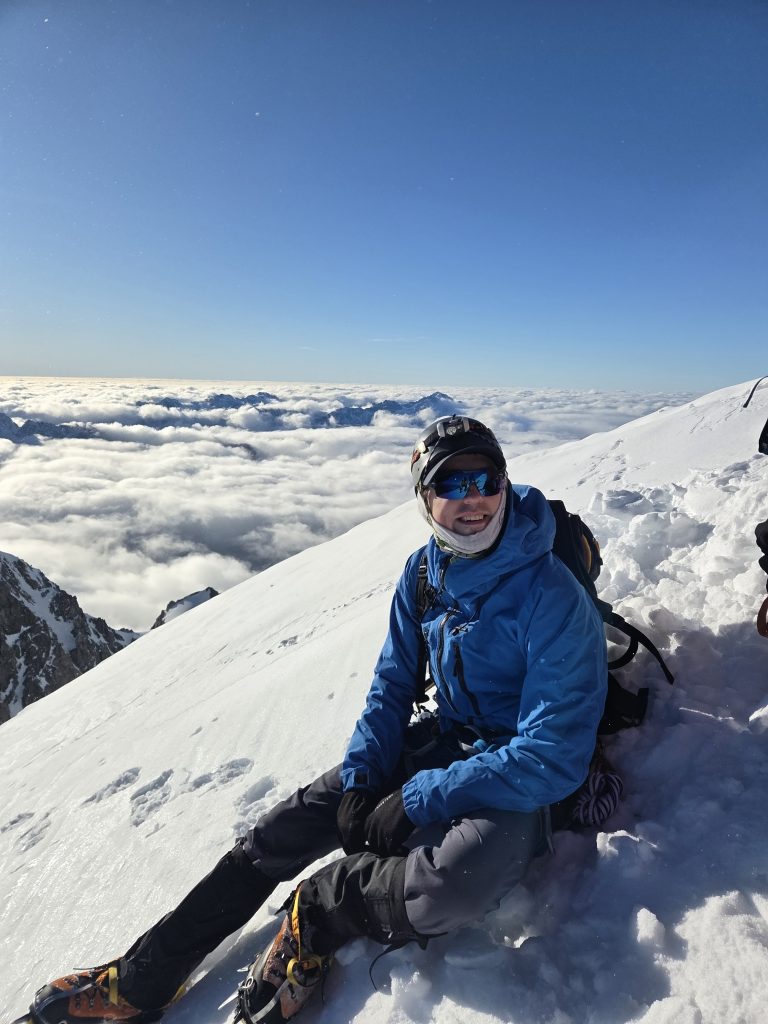
Outside of my degree, I try to spend as much time as possible in the mountains: climbing, hiking, or both. When at home, I’m usually complaining about the lack of hitting on the San Fransisco Giants roster.
Patrick kees Lawn
I completed my master’s degree in the relativity group in 2026, where I worked under the supervision of Florian Beyer and David Hutchinson. My thesis examined the impact of anisotropy on the behavior of the early universe and the evolution of such anisotropies as we tend towards the initial singularity. So, this project made significant use of differential geometry, stability analysis, and numerical simulations. Before this, I graduated with a bachelor’s degree in physics in 2024.
Outside of study, I often enjoy going for hikes, playing boardgames and ttrpgs with friends, and archery. I am also passionate about teaching; having demonstrated and tutored physics and maths papers for the past three years. I also have tried to make the most of opportunities for community outreach by getting involved with GEMSinSTEM, the university maths and physics club, Otago open day, and the NZ International Science Festival.
Jed Thompson-Fawcett
Ngā mihi, Jed:
Tēnā koe,
Ko maungakiekie tōku maunga,
Ko waitematā tōku moana,
Ko Ngāti Whātua tōku iwi,
Ko Kaipara tōku hapū,
Ko Jed tōku ingoa.
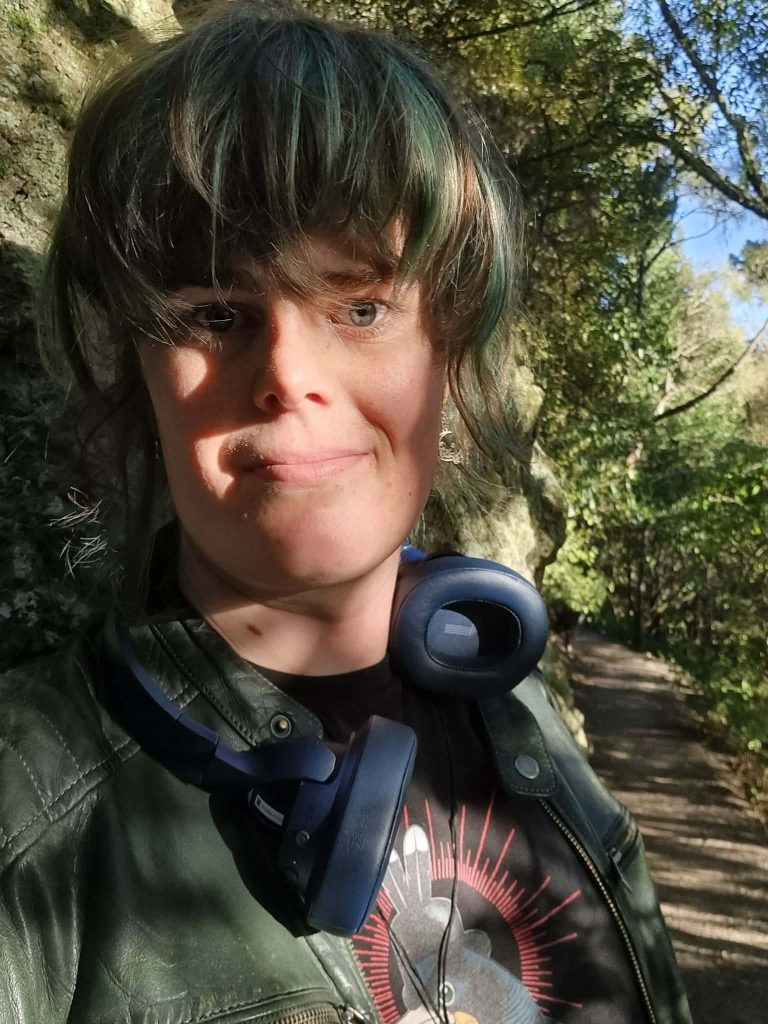
Hello, my name is Jed. I am a Māori Master’s tauira (student) in the relativity group here at Ōtākou Whakaihu Waka (University of Otago). I am Ōtepoti (Dunedin) born and raised, and I am an avid runner and mathematician. I have a BSc Hons First Class in Mathematics and a BSc, majoring in Mathematics and Physics with a minor in Computational Modelling.
My research interests lie in the initial value problem for gravitational wave scattering, derived from the linearised Einstein’s equations. More specifically, I am investigating how one should choose their initial gravitational wave front on past null infinity. This is motivated by the willingness to get a well-behaved solution to the spin-2 equations on a Minkowski background (these equations are singular at spatial infinity) and also how to find physically realistic initial data.
Ngā mihi ki a koe.